
The public image of an Australian sporting icon is often painted in broad, heroic strokes, but the private reality behind the curtain is frequently far more intricate and demanding. Wally Lewis, a name synonymous with Rugby League royalty, has long occupied a pedestal in the national consciousness. However, recent discourse surrounding a widely publicized family rift has cast a new, scrutinizing light on the private dynamics of the Lewis household. Lincoln Lewis, the son of the legendary “King” of Queensland, has finally stepped forward to address the swirling narratives, offering a perspective that challenges the simplistic, polarized accounts often found in mainstream media.
TravelGuides & Travelogues
Discover more
Broadcast & Network News
Educational Resources
Geographic Reference
The narrative of a public “rift” serves as a potent hook for readers, yet it often fails to account for the gradual, nuanced erosion of familial consensus that can occur over decades. Lincoln Lewis’s recent commentary suggests that the friction within the family is not a singular, cataclysmic event, but rather a manifestation of evolving personal boundaries and the inevitable pressures that come with existing under a permanent spotlight. For years, the family has navigated the dual realities of maintaining a private life while being perceived as public property. The strain of this duality, exacerbated by the relentless pace of modern media consumption, appears to be at the heart of the current interpersonal distance.
Deconstructing the Public Narrative
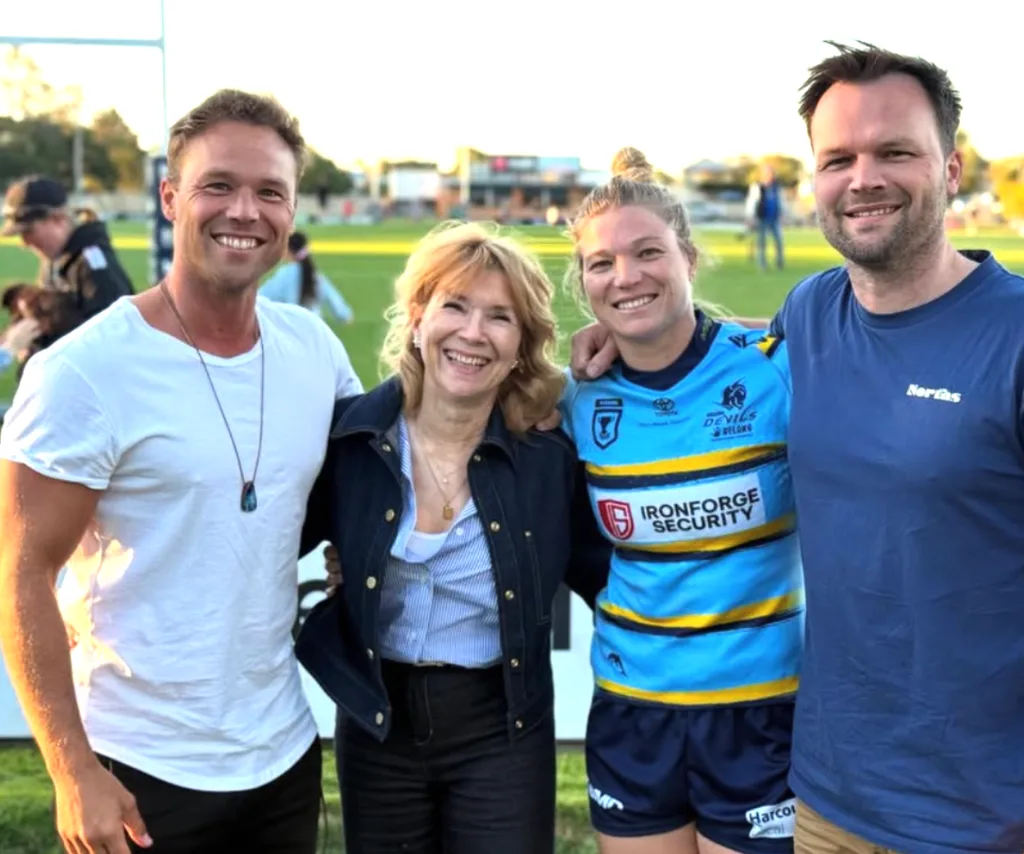
In the realm of celebrity and high-profile athletics, the “rift” narrative is a well-worn trope that relies on the expectation of conflict. By framing family disagreements as dramatic schisms, the media often strips away the humanity of the individuals involved. Lincoln’s approach in breaking his silence is notably different; he focuses on the complexity of adult relationships rather than the sensationalism of a fallout. He acknowledges the weight of his father’s legacy—a legacy that has provided immense opportunity but also an inescapable benchmark for all who bear the Lewis name.
The core of the issue, according to those observing the family dynamic, is not a lack of affection, but a divergence in how each family member chooses to navigate their individual identity. For Wally Lewis, his identity is deeply anchored in his historic achievements on the field and his subsequent transition into sports commentary. For his children, the challenge lies in carving out spaces that exist independently of that enormous shadow. When these paths diverge, the resulting friction is often misinterpreted by outside observers as an adversarial dispute, when it is, in reality, a quiet, painful reorganization of family roles.
The Challenge of Legacy and Perception

Wally Lewis has denied reports he had an affair with his new girlfriend while still married to his wife of 36 years. Pictured: Wally and Jacqui Lewis in 2012
The broader context of this situation reflects a growing trend in Australian sports culture: the shift from viewing athletes as untouchable legends to recognizing them as multi-dimensional people whose family lives are subject to the same complications as any other. The expectation that a hero of the state must have a perfect, cohesive family unit is a societal projection that places undue pressure on the participants. Lincoln’s efforts to provide a more realistic account serve as an important correction to the narrative, reminding the public that heroes are not immune to the complexities of human interaction.
Furthermore, the role of social media in amplifying these family stories cannot be overstated. Every comment, every unverified report, and every curated photograph is dissected for signs of discord. This environment makes it nearly impossible for a family to address their differences in private. By choosing to speak out, albeit cautiously, Lincoln is attempting to reclaim a degree of agency over the story, shifting the focus from speculative gossip to the reality of adult communication.
Navigating the Path Forward
The situation remains fluid, as is the nature of family reconciliation and adjustment. It is unlikely that the public interest in the Lewis family will dissipate, given their foundational status in Queensland’s cultural landscape. However, the tone of the conversation has shifted. By emphasizing that the reality is “more complex,” Lincoln has invited the public to view the situation with a higher degree of empathy and patience. The expectation for an immediate resolution or a public reconciliation is a byproduct of a media cycle that favors closure over reality.
Ultimately, the most significant takeaway from this episode is the reminder that even the most celebrated families must negotiate the boundaries of their private lives against the demands of their public profiles. As the Lewis family continues to move through this period of transition, the focus will likely remain on their ability to maintain their individual integrity while managing the ongoing pressure of their collective history. The story is no longer just about a reported rift; it is a case study in the modern experience of navigating personal relationships under the unyielding gaze of the public eye.