The world of tennis often celebrates champions when they lift trophies, break records, and deliver extraordinary performances. Yet, when results fall short of expectations, even the most respected athletes can find themselves facing intense criticism from disappointed fans and commentators.
Alex de Minaur knows the pressure that comes with representing Australia on the international tennis stage. Known for his speed, determination, and relentless work ethic, the Australian star has built a reputation as one of the sport’s most dedicated competitors.

Following his defeat at the China Open, discussions surrounding de Minaur’s performance reportedly intensified. While losses are an inevitable part of professional tennis, the reaction to an athlete’s setback can sometimes become more personal than the circumstances genuinely warrant.
Amid these discussions, a message attributed to tennis legend Rod Laver has attracted attention. The former champion was portrayed as defending de Minaur, urging critics to consider the immense pressure professional players experience throughout a demanding season.
The reported statement emphasized that tennis players face expectations week after week, often competing across different countries, surfaces, and time zones. Maintaining consistency under these conditions requires exceptional physical preparation, mental discipline, and an extraordinary commitment to improvement.
For de Minaur, the challenge extends beyond winning individual matches. Every tournament presents another opportunity to prove himself against elite opponents, while every defeat can trigger questions about his form, preparation, and ability to deliver when expectations are highest.
Professional tennis is particularly unforgiving because performances are measured so publicly. Scores, statistics, rankings, and match footage are available almost immediately, allowing supporters to analyze every decision and mistake, sometimes without fully understanding the circumstances surrounding a player’s performance.

A disappointing result can therefore become the starting point for widespread debate. Some observers focus on tactical choices, while others question confidence, consistency, or competitive readiness. Such discussions can be useful, but criticism becomes less constructive when it ignores context.
The message attributed to Laver reportedly highlighted this distinction. Rather than judging de Minaur solely by one tournament result, it encouraged people to recognize the effort required to compete consistently at the highest level of the game.

That perspective reflects an important reality about professional sport. Success rarely follows a straight line, and even outstanding competitors experience periods when their performances do not match their ambitions or the expectations placed upon them.
De Minaur has earned recognition for his relentless movement around the court and his willingness to chase seemingly unreachable balls. His playing style demands tremendous physical effort, making recovery, preparation, and careful management of his schedule especially important.
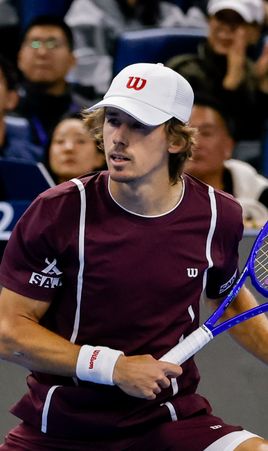
However, physical commitment alone cannot guarantee victory. Tennis matches are shaped by numerous factors, including an opponent’s tactical execution, serving accuracy, court conditions, and the ability to remain composed during crucial moments when the smallest details can determine the outcome.
A defeat does not automatically indicate that a player has failed to prepare properly or lacks the necessary ability. Sometimes, an opponent simply performs better on the day, turning a closely contested encounter into a difficult result for the player who loses.
This is why perspective matters when discussing athletes after disappointing performances. Constructive analysis can identify weaknesses and opportunities for improvement without dismissing the hard work, resilience, and professional standards that brought a player to the highest levels of competition.
Rod Laver’s name carries considerable historical significance in tennis. As one of the sport’s most celebrated champions, he understands the demands associated with elite competition and the challenges that arise when athletes are expected to deliver extraordinary results repeatedly.
His legacy is closely connected to consistency, adaptability, and the ability to overcome difficult opponents. Those qualities provide a meaningful context for discussions about the pressures modern players face, even though today’s professional circuit operates under different schedules and media conditions.
For contemporary athletes, the spotlight rarely disappears after a match ends. Interviews, social media reactions, ranking discussions, and tournament analysis can extend the emotional impact of a loss long after players have left the court.
The immediate reactions surrounding de Minaur’s China Open defeat illustrate how quickly sporting conversations can intensify. Supporters may express frustration because they believe in a player’s potential, while critics may interpret a single disappointing performance as evidence of broader problems.
Neither reaction necessarily captures the full picture. A player’s development is better understood through sustained performance, patterns across multiple tournaments, and the ability to respond constructively when results do not meet expectations.

For de Minaur, the most important response may ultimately come through his performances rather than public debate. Professional athletes must learn from defeats, identify areas requiring attention, and prepare for the next challenge without allowing outside noise to dominate their priorities.
That process takes patience. Adjustments to tactics, serve placement, movement, and decision-making often require repeated practice before they produce visible improvements during competition. Progress can therefore continue even when the scoreboard temporarily suggests otherwise.
Supporters also play a meaningful role in shaping the atmosphere surrounding professional sport. Honest criticism is part of competition, but encouragement can remind athletes that their value is not determined exclusively by their most recent result.
This does not mean players should be protected from every difficult question. Elite competitors operate in a results-driven environment, and evaluating performances remains an important part of professional tennis. The distinction lies in whether criticism remains fair, specific, and proportionate.
De Minaur’s supporters have reasons to appreciate his determination regardless of the outcome of a particular match. His willingness to compete for every point reflects qualities that have become central to his identity as an Australian tennis representative.
For younger players watching his career, the response to adversity can be just as instructive as a championship victory. Learning to accept defeat, maintain discipline, and return stronger offers lessons that extend beyond sport into everyday life.

The broader conversation also highlights the difficult balance between public expectations and personal resilience. Athletes are admired for their extraordinary abilities, but they remain human beings who must process disappointment, manage fatigue, and recover from demanding competitions.
When criticism becomes excessive, it can distract attention from meaningful sporting analysis. Instead of discussing tactical decisions or the opponent’s strengths, conversations may become focused on personal judgments that provide little insight into what actually happened during a match.
A more balanced approach would examine the performance carefully while acknowledging the unpredictable nature of tennis. Every tournament introduces different challenges, and even the strongest competitors cannot maintain their highest level in every match throughout an entire season.

The message attributed to Laver has therefore resonated with a familiar principle in sport: athletes deserve to be assessed fairly. Recognizing their commitment does not require ignoring mistakes, but it does require understanding that setbacks are part of competition.
For Australia, de Minaur remains an important figure in the country’s tennis story. His performances attract attention because supporters see his potential and hope to watch him challenge the world’s leading players at the biggest tournaments.
That attention can be motivating, but it also creates expectations that are difficult to satisfy continuously. Managing those expectations requires perspective from athletes, coaches, commentators, and fans who follow every stage of a demanding professional season.
Ultimately, the significance of a defeat depends on what follows. A difficult tournament can become an opportunity to reassess strategies, strengthen weaknesses, and return to competition with renewed determination, provided the athlete has the time and support needed to recover.
Whether or not every detail of the reported defense attributed to Rod Laver is independently confirmed, the underlying discussion raises an important question about sporting culture. How can fans demand excellence while still allowing athletes room to struggle?
The answer lies in combining high standards with respect. Professional tennis thrives on competition, honest evaluation, and the pursuit of improvement, but it also benefits when athletes are recognized for their dedication rather than defined entirely by disappointing results.
For Alex de Minaur, the road ahead will bring further opportunities to demonstrate his abilities. One defeat cannot determine the direction of an entire career, just as one victory cannot guarantee continued success against the world’s strongest opponents.
As the tennis season progresses, attention will inevitably shift toward upcoming tournaments and new matchups. De Minaur’s response to adversity will be judged through his preparation, performances, and ability to compete with the same determination that has earned him recognition.
In the end, the strongest message from this discussion is not that athletes should escape criticism. It is that criticism should leave room for fairness, context, and the recognition that even elite competitors must continually learn, adapt, and overcome difficult moments.