In the modern landscape of professional sports, where contracts are often treated as mere commodities and player movement is dictated by the highest bidder, stories of genuine, unwavering loyalty have become an increasingly rare commodity.
Yet, in a testament to the enduring human spirit and the profound bonds forged between an athlete and their community, Lachie Neale of the Brisbane Lions has recently delivered a powerful reminder of what it truly means to represent a club. His recent declaration—”Brisbane Lions is home. I don’t play for money; I play for the people who believed in me”—serves as a poignant anchor in an era defined by professional volatility.
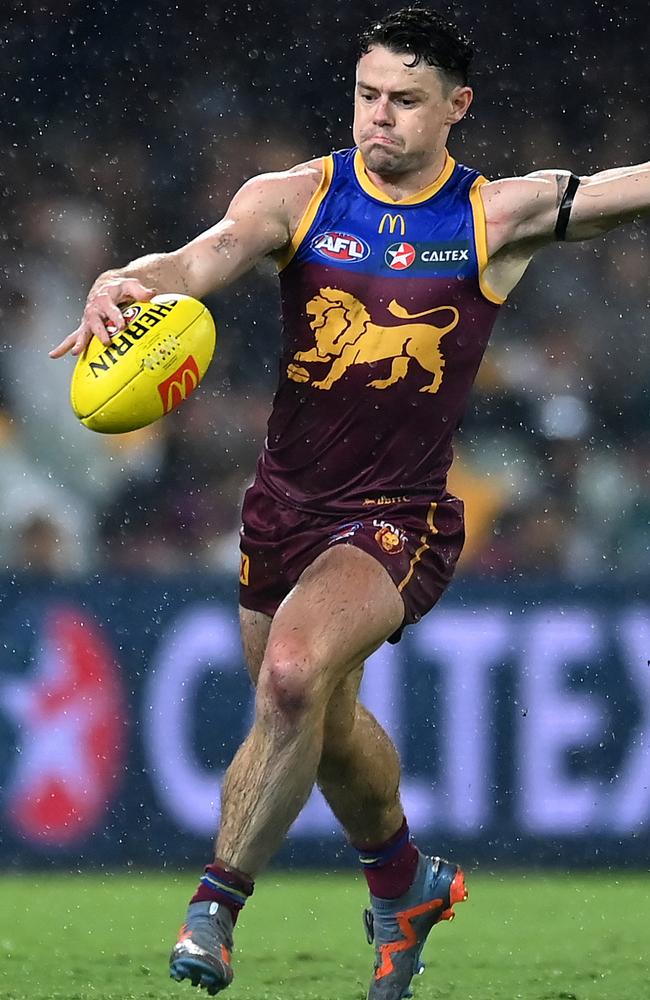
The narrative began to unfold amidst the clandestine pressures of the trade period. When rumors surfaced that the star midfielder had been included in internal trade discussions, the sporting world braced for the inevitable drama that accompanies such high-profile departures. However, rather than seeking a lucrative exit or leveraging his immense talent to secure a more profitable arrangement elsewhere, Neale chose a different path.
He approached the Brisbane Lions’ management with a proposition that left many in the industry bewildered: he expressed an absolute willingness to accept a salary reduction, provided he could remain within the fabric of the club he considers his family.
For those who have followed Neale’s journey, this decision is not merely a financial concession; it is an affirmation of his core values. Throughout his tenure at the Gabba, Neale has consistently demonstrated that his contributions extend far beyond his statistical output.
He has become a pillar of the Brisbane community, a mentor to younger teammates, and a living embodiment of the club’s ethos. His commitment is rooted in the gratitude he feels toward the supporters, the staff, and the visionaries who invested their faith in him when he first walked through the club’s doors.
However, the intrigue surrounding this story deepened significantly when the Hawthorn Football Club—the entity rumored to be the primary suitor in these trade talks—offered a response that caught the league entirely off guard. The nature of the communication from the Hawks was unexpected, creating a ripple effect through the AFL community.
It was not a typical pursuit of a superstar; instead, the interaction highlighted the sheer gravity of Neale’s resolve. The Hawks, in their assessment of the situation, seemingly recognized that they were not merely negotiating with a player, but attempting to disrupt a bond that had become impenetrable.
As the dust settles on these revelations, the broader takeaway for spectators and analysts alike is one of inspiration. In a world that often prioritizes the bottom line, Lachie Neale has signaled that there are things far more valuable than a contract extension.
He has chosen the quiet dignity of belonging over the noise of the marketplace. For the fans who have cheered for him, his choice is a resounding victory—a declaration that while professional sports are a business, the heartbeat of the game will always reside in the people who believe in one another.
Could you tell me which particular aspects of Lachie Neale’s loyalty to the club you find most admirable?