In a revealing development surrounding one of Australia’s most prominent sporting families, Lynda Lewis, the new wife of rugby league icon Wally Lewis, has publicly addressed the ongoing tensions with her stepchildren. The deeply personal rift, which has captured significant media attention, highlights the complex and often challenging nature of navigating blended family dynamics under the intense glare of the public eye. Lynda’s candid admission that her efforts to connect were met with resistance sheds new light on a deeply private struggle, bringing a sobering reality to the ongoing public discourse surrounding the revered athlete’s personal life.
Wally Lewis, affectionately known as “The King” of rugby league, has long been a revered figure in Australian sports history. However, in recent years, the headlines surrounding the Queensland legend have shifted from his historic on-field triumphs to his off-field personal affairs. The dissolution of his decades-long marriage to his first wife, Jacqui, sent shockwaves through the sporting community and his fanbase. Subsequently, his new relationship and marriage to Lynda brought a new chapter for the champion athlete, but it also ushered in a period of significant family upheaval and undeniable emotional friction.
Stepping into the life of a highly recognizable public figure is rarely simple, but attempting to integrate into an established family unit presents an even greater set of hurdles. Addressing the situation with a measured tone, Lynda recently articulated the painful reality of her relationship with Wally’s adult children. Her poignant statement, noting that despite her best efforts, she was not viewed as a maternal figure, underscores the emotional complexities involved in their current dynamic. It is a common phenomenon in blended families, particularly those involving adult offspring who possess deep-rooted, unwavering loyalties to their biological parents. Lynda’s acknowledgement of this reality suggests a desire to clarify her position and document her attempts at peace, rather than intentionally ignite further conflict.
For Wally’s children—Mitchell, Lincoln, and Jamie-Lee—the transition has undeniably been fraught with emotional difficulty. The Lewis children have largely remained fiercely protective of their mother, navigating their parents’ separation with visible distress that has occasionally spilled over into the public domain. Loyalty in the wake of a family breakdown often creates an impenetrable barrier for new partners. From a sociological and psychological standpoint, adult children frequently struggle to accept a parent’s new spouse, viewing the new relationship through a lens of past family history and personal grief. Their reaction, while deeply impactful to the new partner, is often a natural defense mechanism aimed at preserving the memory and sanctity of their original family structure.
The intense public scrutiny surrounding the Lewis family only serves to amplify these private tensions. Australian audiences have followed Wally Lewis’s journey for decades, creating a powerful parasocial relationship where the public feels uniquely invested in his personal affairs. When a beloved national figure experiences family discord, the court of public opinion is swift to analyze, dissect, and judge. This relentless media spotlight can severely hinder the healing process, making it exceedingly difficult for the family members to communicate openly and resolve their differences away from the cameras. Every public statement, every social media post, and every silence is heavily scrutinized by commentators and fans alike, adding immense pressure to an already fragile situation.

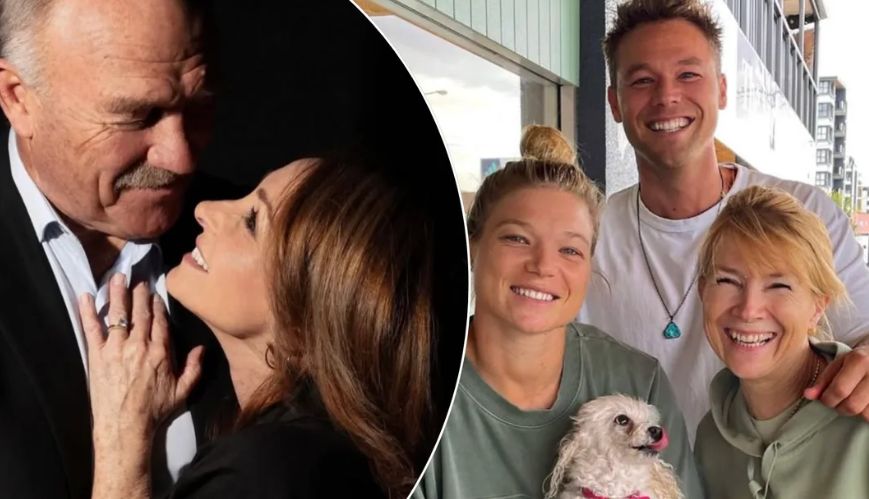
The Lewis kids – Lincoln, Jamie-Lee and Mitch – sided with their mum Jackie after Wally and Jackie’s bitter separation. (Credit: Instagram)
Beyond the specific individuals involved, this ongoing situation reflects a broader societal narrative regarding modern family structures. The challenges faced by the Lewis family are mirrored in households across the nation, albeit without the added pressure of fame and legacy. Family counselors consistently note that building trust and establishing comfortable boundaries in a blended family can take years of patient, careful navigation. The expectation of immediate harmony is often unrealistic, and setbacks are a standard part of the integration process. Lynda’s public commentary brings this remarkably common domestic issue to the forefront of national conversation, proving that wealth, status, and sporting immortality offer no immunity against complex interpersonal struggles.
As the dust settles on this latest public revelation, the path forward for the Lewis family remains highly uncertain. While Lynda’s comments provide clarity on her personal experience and the strict boundaries she has encountered, bridging the generational divide will likely require sustained effort, mutual respect, and a significant amount of time. Ultimately, the resolution of this family feud rests not in the public domain or media headlines, but in the private, untelevised moments of understanding and compromise that may, or may not, unfold in the years to come.